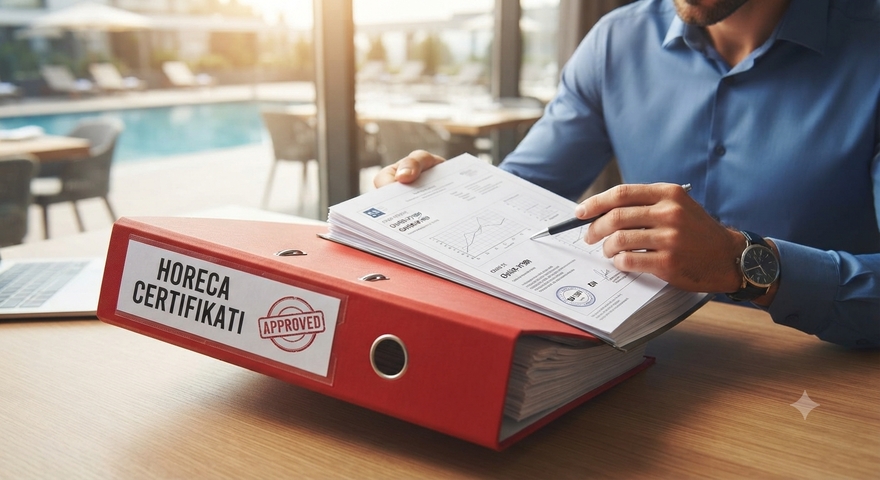
When purchasing furniture for a restaurant venue, hotel, or pool terrace, a certificate is not just a piece of paper in a folder. It is proof that the product has been tested under conditions suitable for professional use — and that it will not fail under the first real load. At the same time, it protects you if an incident occurs.
In practice, it happens that suppliers cite certificates that are either outdated, do not cover the specific model, or are relevant for domestic rather than professional use. This guide explains which standards are truly relevant for HoReCa outdoor spaces, what they verify, and how to request the proper documentation.
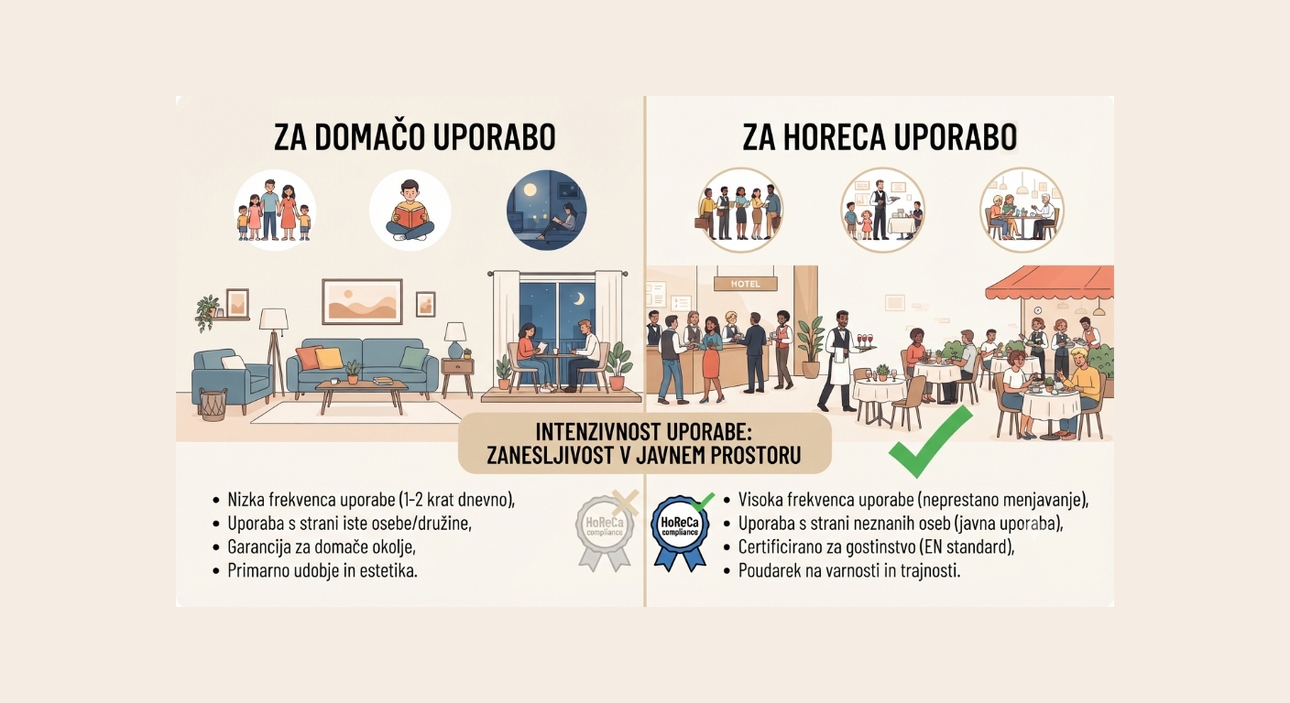
Furniture for public use is exposed to significantly more intensive strain than household furniture — often 20 to 30 times greater. A hotel sun lounger is used by guests with different body types and habits, and a restaurant chair is moved, pushed, and pulled multiple times a day. Furniture that is not designed for this will fail — and not always quietly.
In addition to the operational replacement costs, there are two more serious risks:
Liability for damages: If a guest falls because of a broken chair leg or an unstable sun lounger structure, you as the operator of the premises are responsible for ensuring safe equipment. The EN 581 certificate is one of the proofs that you acted diligently when making the purchase.
Insurance company requirements: Some insurance companies check, when handling claims, whether the equipment was certified for its intended use. A household chair on a hotel terrace is a risky situation.
EN 581 is a European standard that covers the safety and strength requirements for outdoor seating furniture and low tables. It is divided into three parts:
It defines the basic safety principles for the construction of outdoor furniture — requirements regarding edges, surfaces, parts that could catch or injure the user, and stability. It applies to the entire category of furniture, both domestic and professional.
This is the key part for chairs and benches. It checks:
The standard distinguishes between class 1 (domestic use) and class 2 (non-domestic or professional use). For HoReCa, class 2 is mandatory. When a supplier states "EN 581-2 certified," check whether it is class 1 or 2 — the difference is substantial.
The same principle as for seating, applied to tables. It checks surface stability, the strength of legs and the structure under static and dynamic loads. For professional terrace tables in HoReCa, class 2 is also required here.
EN 16139 is a standard for non-domestic (contract) seating furniture, covering a similar area as EN 581-2, but with some differences in testing methodology. It often appears with indoor furniture for hospitality, cafés, and hotel common areas.
For outdoor use, EN 581 is the primary and more specific standard. EN 16139 is more often relevant when the same furniture model appears in both contexts (indoors and outdoors). If a supplier cites EN 16139 for outdoor furniture, ask whether the furniture has additional certification for outdoor exposure.
EN 1021-1 and EN 1021-2 are standards that test the resistance of upholstered furniture to ignition when in contact with a smoldering cigarette (EN 1021-1) and a match flame equivalent (EN 1021-2).
For outdoor furniture, this standard is directly relevant in the following cases:
Hotels and larger complexes often require an EN 1021 certificate for all textile components in common areas — especially where smoking or open candles are present.
For furniture without cushions (aluminum + mesh seating), this standard is not directly relevant, but it is often required for cushions purchased separately.
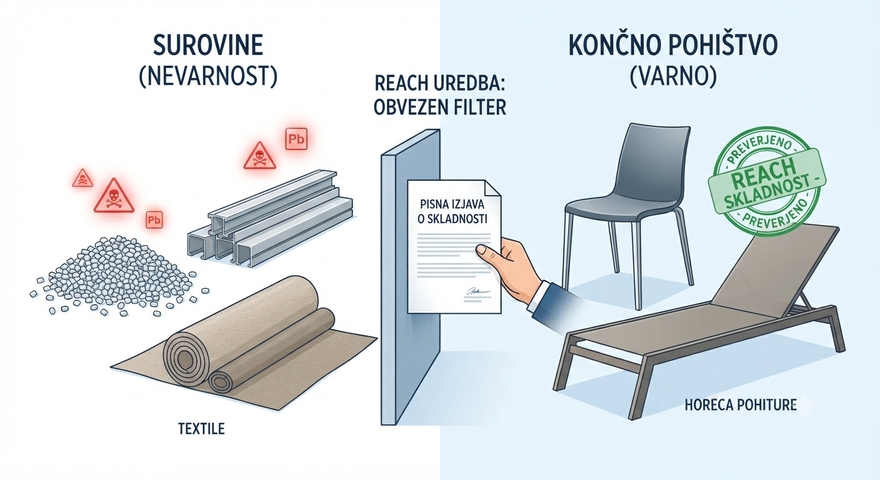
REACH (Registration, Evaluation, Authorisation and Restriction of Chemicals) is a European regulation on chemical substances in materials. For furniture, this means that materials must not contain substances from the SVHC list (Substances of Very High Concern) above the permitted limit.
In practice, REACH is relevant for:
Suppliers of professional furniture for the European market must be REACH compliant by law — but a written declaration of conformity (Declaration of Conformity) is the proof that you have the right to request.
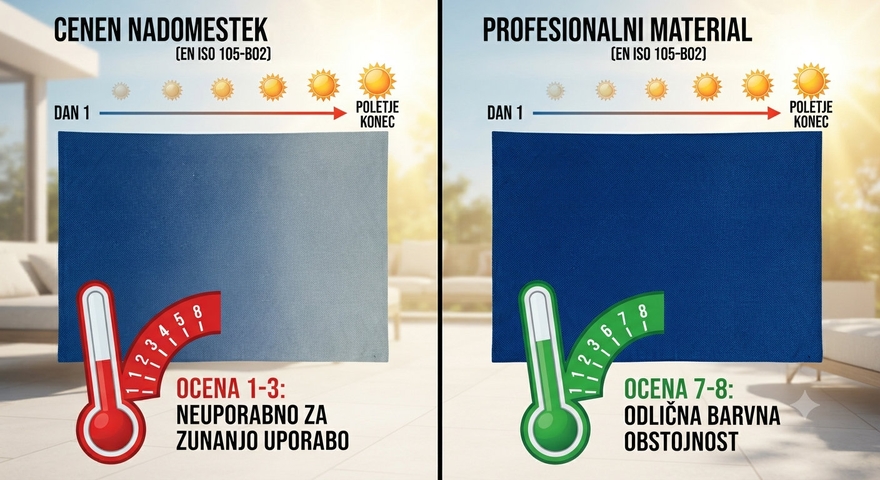
EN ISO 105-B02 is a standard that tests the color fastness of textiles when exposed to artificial light (xenon lamp). It is relevant for all fabrics in constant outdoor use: mesh seats, cushions, umbrellas.
The test result is a rating from 1 to 8 — at 8, color fastness is exceptional; at 1, the material is unsuitable for outdoor use. Professional materials for HoReCa (Textilene, Batyline, high-quality Solution Dyed Acrylic) achieve a rating of 7–8.
This standard is often not listed on furniture technical data sheets because it applies to the material, not the entire product. Ask the supplier for the fabric rating according to EN ISO 105-B02 or an equivalent test — this quickly distinguishes professional materials from cheap substitutes.
The CE marking on furniture means that the manufacturer has ensured that the product complies with the relevant European directives. Furniture itself is not subject to mandatory CE certification, except in specific categories (e.g. children's equipment).
The presence of the CE mark on furniture does not prove that it is certified according to EN 581 or EN 16139. It is merely a general indication of compliance with applicable regulations. CE does not replace specific strength and safety standards relevant for HoReCa use.
When speaking with a supplier, these phrases give you actual information:
Instead of: "Is the furniture certified?" Ask: "Can you provide me with the test report according to EN 581-2, class 2, for this specific model?"
The difference is essential. A general claim about a certificate is worthless. A test report with the model name, test date, and confirmed class is proof.
Also check:
| Furniture type | Primary standard | Additionally relevant |
|---|---|---|
| Outdoor terrace chair (HoReCa) | EN 581-2, class 2 | EN 16139, REACH |
| Outdoor terrace table | EN 581-3, class 2 | REACH |
| Hotel poolside sun lounger | EN 581-2, class 2 | EN ISO 105-B02 (fabric) |
| Cushions and textile coverings | EN 1021-1/2 | EN ISO 105-B02, REACH |
| Lounge furniture on the terrace | EN 581-2, class 2 | EN 1021-1/2 (upholstered) |
| Furniture in indoor common areas | EN 16139 | EN 1021-1/2 |
Certificates for HoReCa furniture are not a bureaucratic formality — they are an operational decision-making tool. The difference between class 1 and class 2 under EN 581-2 is the difference between furniture that lasts two seasons and furniture that lasts ten. Requesting specific test reports instead of general claims is the practice that separates suppliers who stand behind their products from those who do not.
For hotels and larger complexes, it makes sense to include certification requirements already in the furniture tender — this way, documentation becomes a condition, not a benefit.
Looking for furniture with proven certification for professional HoReCa use? Contact us — we provide technical documentation for each model and, if needed, arrange a test sample before a larger order.
Author of the article: Jan Češnjevar
