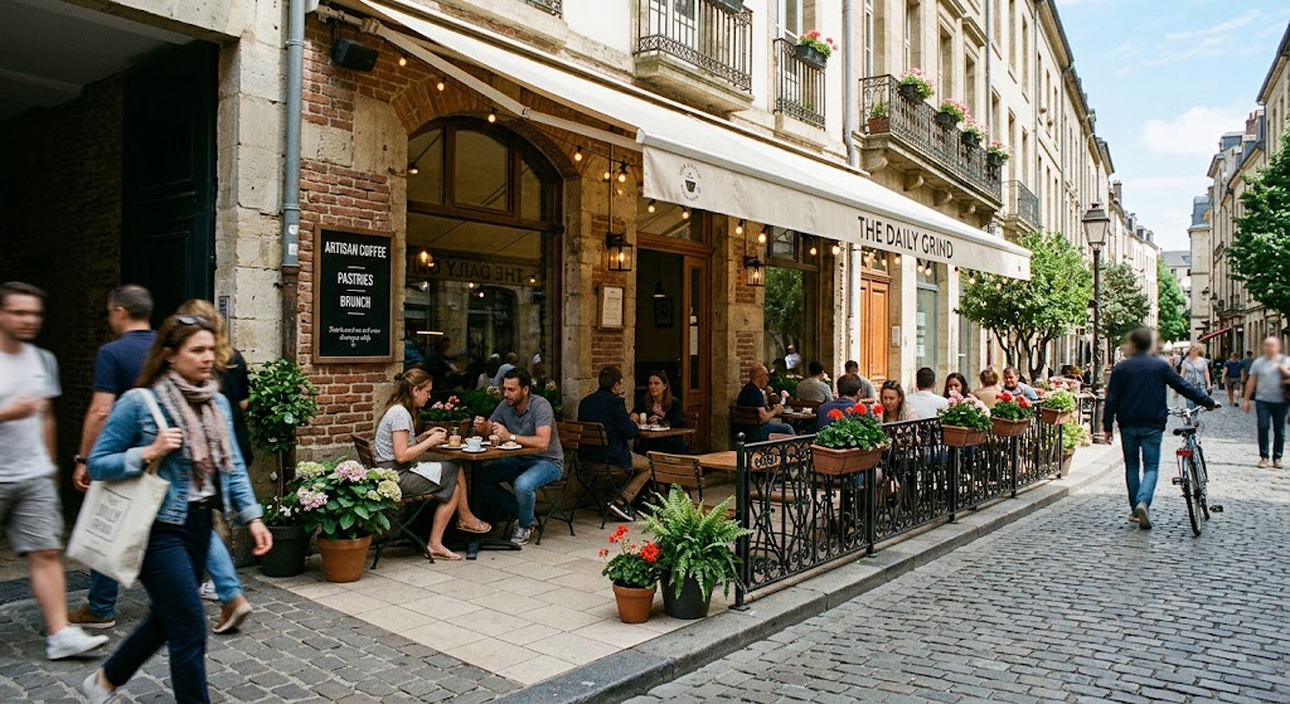
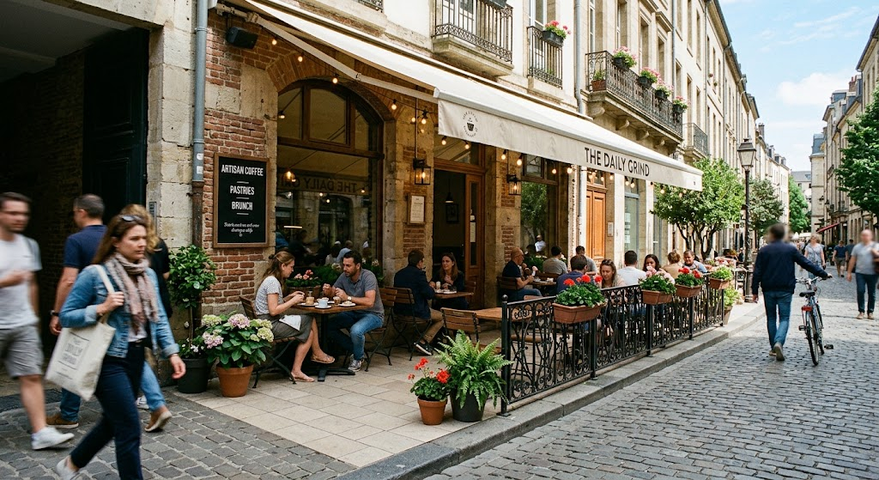
You never get a second chance to make a first impression. A guest's first impression is unrepeatable – and at a café, bar or restaurant they form it before they ever walk through the door.
Your terrace is one of the first things a passer-by notices. Tidy tables, attractive chairs, pleasant colours and a well-considered outdoor space can create the feeling, in just a few seconds, that this would be a nice place to stop. The same works in reverse: an untidy, dated or randomly furnished terrace can turn a guest away before they have even seen what you offer.
A hospitality terrace is not simply an extra space where we put a few more tables and chairs. It is the venue's calling card, part of its identity, and often the most visible presentation of your business to people walking past.
When planning a modern terrace, however, good looks alone are not enough. Hospitality equipment is exposed to intensive daily use: moving, cleaning and the weather. The right solution for a hospitality terrace therefore has to combine design, comfort, functionality and suitability for professional or public use.
How do you get there? Here are five ideas worth considering when furnishing or renovating your terrace.
Before you start picking individual garden chairs and garden tables, look at the terrace from the guest's point of view. What does a person approaching your venue actually see?
A first impression cannot be repeated, so it matters that the terrace signals from a distance what a guest can expect.
A modern terrace does not necessarily mean minimalist grey or black furniture, and it does not mean chasing every passing trend. What matters more is creating a clear, coherent look that matches the concept and the offer of your venue.
A city café may need a completely different character from a cocktail bar, a patisserie, a hotel terrace or a traditional restaurant. The furniture should support the venue's identity, not shout over it.
The details matter too: the colour of the chairs, the shape of the tables, the dimensions and shape of the table top, the parasols, the seat cushions and the planting all create the whole. An individual chair can be very beautiful and still not work in a specific space.
So when you plan, do not just select products – plan around the complete setting and the offer of your venue. You can see examples of completed terraces among our projects.
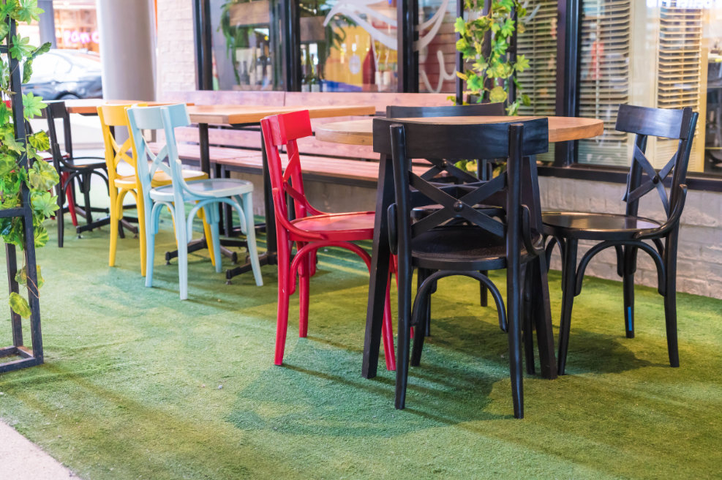
Garden chairs are usually one of the most visible elements of a hospitality terrace. They have a strong effect on how the terrace looks, and by changing the chairs you can change the character of the whole venue relatively quickly.
There are many versions and materials available – metal chairs, polypropylene chairs, chairs with techno rattan, and various material combinations. The choice depends on the venue's concept, the location of the terrace and the way it is used.
In professional use, appearance must never be the only criterion. A garden chair in a private garden is used by a handful of people, whereas a commercial chair can be used by 100 different guests in a single day. Staff and guests move the chairs, stack them and clean them, and in many venues they are put away and set out again every day.
The construction of commercial chairs and tables therefore has to be suited to that kind of load. This difference is governed by two European standards: EN 581 for outdoor furniture, which grades intended use as camping, domestic and non-domestic (professional), and EN 16139 for non-domestic seating. We covered this in more detail in our article Certificates for HoReCa furniture.
In the AG VEBO range, suitability for professional use is regularly demonstrated by exactly these certificates.
Stacking chairs can be a major advantage on terraces where the furniture has to be moved or put away often.
Comfort matters as well: a guest who is sitting comfortably will usually be willing to stay longer than a guest whose chair stops being pleasant after a few minutes. With a professional outdoor chair, you are looking for the right balance between appearance, comfort, durability and practicality in daily use.
Oversized garden tables reduce the number of usable seats and make it harder for staff and guests to move between sets. Undersized tables reduce guest comfort. The dimensions and layout of the tables therefore have to match how the venue actually operates.
A café where most guests come for coffee in pairs has different needs from a restaurant. A bar where guests move around and merge into larger groups needs another solution again – tables and chairs designed for moving and stacking.
Smaller commercial garden tables have the advantage that they can be pushed together. When two guests arrive they use one table; when a larger party arrives, staff can join several tables into one.
The combination of the table base and the size of the top is just as important as the table itself. The base has to provide good stability while still leaving guests enough legroom, and the table top has to suit the intended use in both dimensions and material.
| Type of venue | Usual table top dimension |
|---|---|
| Café, bar | 60 cm or 70 cm (round or square) |
| Restaurant | from 80 cm upwards, up to 120 × 80 cm or 140 × 80 cm |
Logistics matter too. If the terrace is cleared every evening, the weight and folding ability of the furniture are far more important than on a terrace where the tables stay in place most of the time. For venues that move furniture often, folding tables and the ZOWN catering programme are worth considering.
The goal is the right balance between number of seats, guest comfort, circulation space for staff and efficient use of the area.
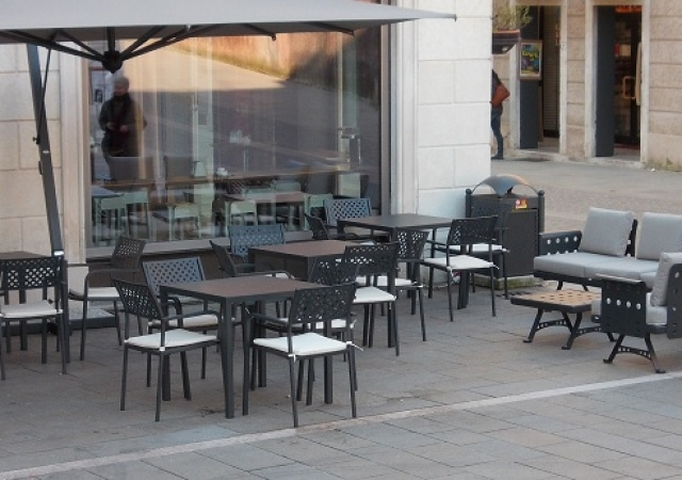
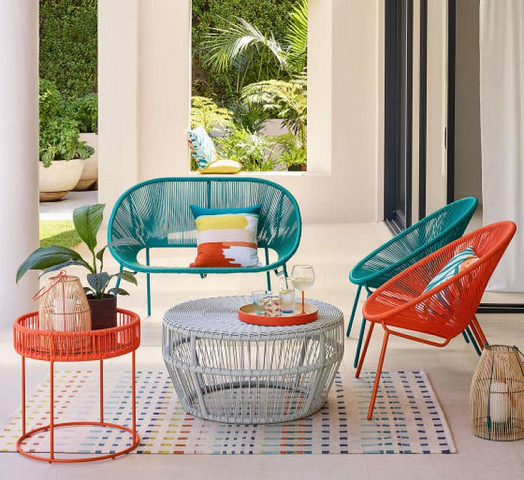
For many years, a great many hospitality terraces looked much the same: dark chairs, dark tables, furniture kept as neutral as possible. That solution can still be elegant, but today there are far more options for creating a distinctive setting.
A contemporary terrace can combine different materials, textures and colours without looking chaotic. The key to modern furnishing is restraint.
Instead of five or six different colours, it is usually better to choose two or three base colours that complement one another. One can be dominant, the second supports it, and the third appears only in the details.
For example: black table bases can be combined with table tops in a warmer tone, while garden chairs in a carefully chosen colour become the main visual element of the terrace.
Another option is a calmer combination in which chairs and tables are neutral and the character comes from seat cushions, parasols or greenery.
The products do not all have to be identical – you can mix different types of seating, or slightly different chairs, as long as they share a common design language. What matters is that your terrace reads as one considered whole.
A guest may not be able to say why they like a particular space, but they will feel the difference between a terrace that was planned and a terrace where products were simply added over the years.
One of the most common mistakes when furnishing a terrace is choosing products mainly on the basis of appearance and a low purchase price. A product that suits a private terrace is not automatically suitable for a hospitality venue – the difference lies above all in the intensity of use.
In hospitality, chairs and tables are used every day, often from morning until late evening. They are used by many different guests, staff move and clean them, and outdoor furniture is additionally exposed to sun, moisture and temperature swings. Hospitality furniture therefore has to be chosen for the real conditions it will face.
The cheapest chair at the moment of purchase can turn into an expensive decision if it has to be replaced quickly. In those cases the environmental side is questionable too, because poor-quality furniture fills landfill sites across Europe. With professional furniture, the initial price is not the only figure that counts – usability and service life matter just as much.
So when planning a modern hospitality terrace, think long-term, economically and ecologically.
These are questions that are invisible in a product photograph but become very important in the daily running of a venue.
It is also worth checking the formal framework before you order. In most European countries, placing a terrace on a public pavement or square requires a permit from the local authority, which may set rules on footprint, boundaries, materials, colours and even the furniture itself – so confirm those conditions before the furniture is specified.
A modern hospitality terrace has to look good, but above all it has to work. The guest needs a good first impression, a comfortable seat and a space they feel at ease in. Staff need furniture they can work with efficiently.
When commercial garden chairs, garden tables, parasols and the rest of the professional equipment come together properly, the terrace becomes more than the outdoor part of the venue – it becomes one of its recognisable features.
Because a first impression cannot be repeated, it is worth making sure it is a good one.
The difference lies mainly in the intensity of use and in the standard the chair has been tested against. A domestic garden chair is used by a handful of people, while a commercial chair may be used by up to 100 different guests in a single day, and staff move, stack and clean it every day. Professional chairs are therefore tested to the more demanding classes of EN 581 or EN 16139 for non-domestic use.
For cafés and bars, table tops of 60 cm or 70 cm in diameter or side length are usual. For restaurants the tops are larger, from 80 cm upwards and up to 120 × 80 cm or 140 × 80 cm. Smaller tables have the advantage that they can be pushed together into larger tables for groups.
Ask the supplier to state the intended professional or public use in the sales document, and ask for the test report or certificate against the relevant standard. A CE mark on furniture is not in itself evidence of suitability for hospitality use. We explain this in detail in Certificates for HoReCa furniture.
The most common are metal (aluminium) frames, polypropylene and techno rattan, plus combinations of these. For all of them, check UV resistance, rain resistance and – for table bases – resistance to the salt spread on walkways in winter.
Yes, if you clear or rearrange the terrace often. On terraces that are packed away every evening, weight and stackability matter more than anything else. If you only need the furniture occasionally or seasonally, chair and table rental is also worth considering.
As a rule, two or three base colours: one dominant, one supporting, and one that appears only in the details such as cushions, parasols and greenery. More colours than that quickly start to look disorganised.
AG VEBO specialises in chairs, tables and other professional furniture for the HoReCa & Events sector. Whether you are furnishing a new terrace or renovating an existing one, we can help you select equipment to suit the space, the way it will be used and the character of your venue.
Contact us · Browse the catalogue · See our references · Outlet offer
AG VEBO d.o.o.
Author of the article: Boštjan Vesel
