
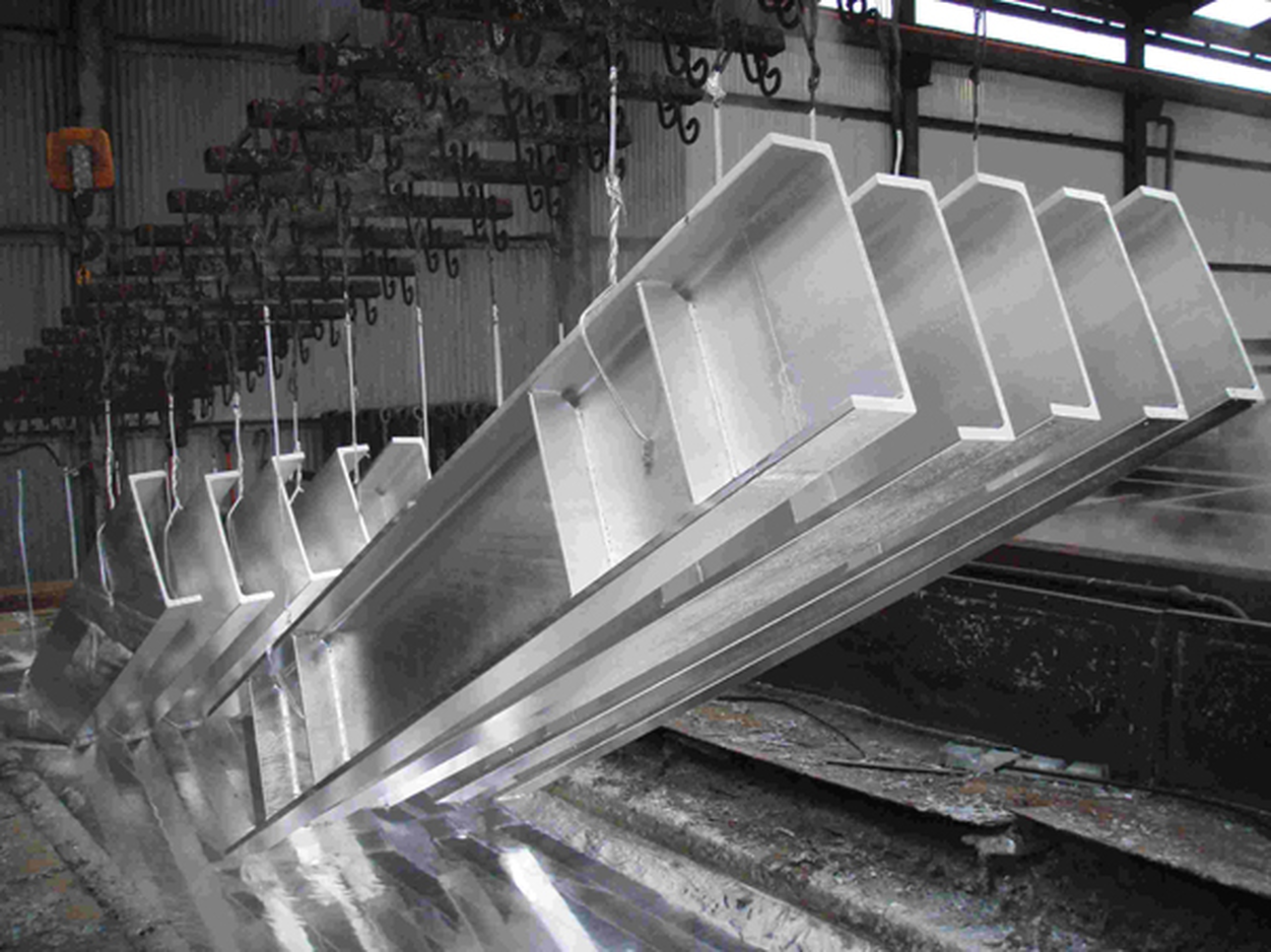
Hot-Dip Galvanizing of Table Bases
Hot-dip galvanizing of table bases: when it pays off and how long it lasts
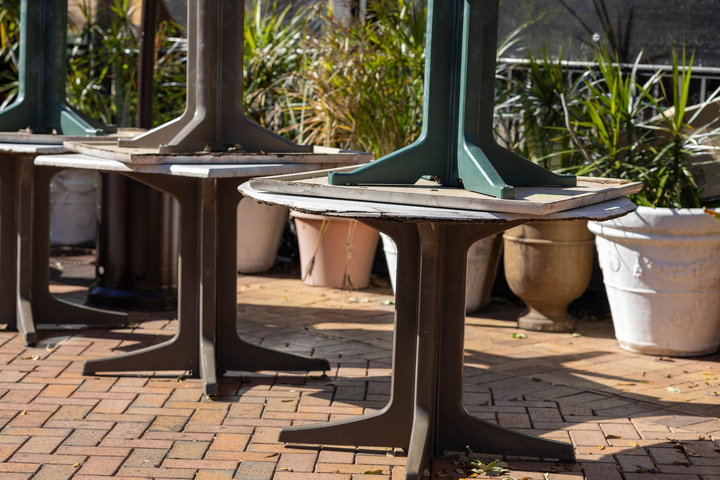
The table top looks like the most exposed part of an outdoor table. In practice, the first part to fail on a hospitality terrace is almost always the table base – specifically the bottom edge of the foot, where it stands in a puddle, where wash-down water rinses it every evening, and where road salt collects in winter.
Rust on a base is not only a cosmetic problem. Once the structure starts to break down, the table loses stability, the cast-iron cross works loose and the top begins to move. A base that cost less at the time of purchase therefore often means replacing the whole table after three or four seasons.
Hot-dip galvanizing changes that. Below we explain what hot-dip galvanizing actually is, why it works differently from paint, how long it lasts in different environments, and when your terrace really needs it – and when it is money you do not have to spend.
Why the base rusts before anything else
A table base sits in the worst possible position on a hospitality terrace. The pattern of stress is the same every day:
- It stands in water. After rain, a film of water remains on the ground and evaporates last under the foot of the base – if it evaporates at all.
- It is rinsed every evening by wash-down water carrying cleaning agents that are often strongly alkaline or acidic.
- Salt attacks it in winter. The salt spread on walkways is a chloride ion – the most aggressive everyday accelerator of corrosion there is.
- It takes knocks. Staff move it, leaf blowers and brooms hit it, chairs scrape it.
That last point is the key to understanding why paint alone is not enough. Powder coating is barrier protection – it works by physically separating moisture from the steel. As long as the layer is intact, it works very well. The moment a scratch or a knock breaks through to bare steel, however, corrosion starts underneath, then spreads sideways beneath the coating and lifts it. One scratch eventually means paint flaking over several centimetres.
What hot-dip galvanizing is and why it works
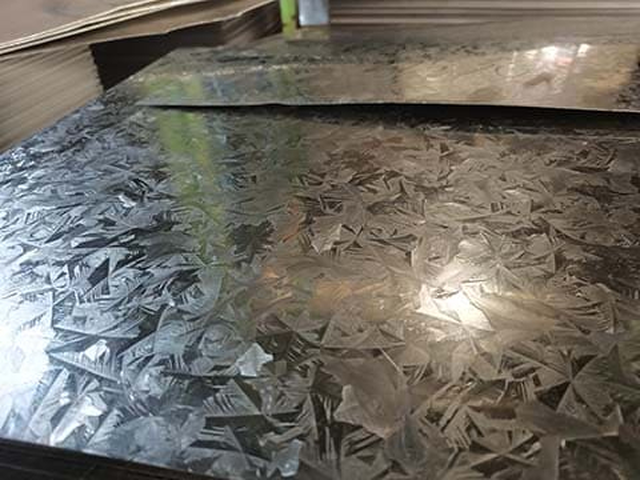
In hot-dip galvanizing, a cleaned steel article is immersed in molten zinc at roughly 450 °C. The zinc does not merely coat the steel – it forms a metallurgical bond, a series of iron-zinc alloy layers grown into the base material.
The process and its requirements are governed by EN ISO 1461, which among other things specifies minimum coating thicknesses according to the thickness of the steel.
Minimum coating thickness under EN ISO 1461
| Steel thickness | Mean coating thickness (min.) | Coating mass (min.) |
|---|---|---|
| over 6 mm | 85 µm | 610 g/m² |
| over 3 to 6 mm | 70 µm | 505 g/m² |
| 1.5 to 3 mm | 55 µm | 395 g/m² |
| under 1.5 mm | 45 µm | 325 g/m² |
Source: Galvanizers Association, EN ISO 1461. Values apply to non-centrifuged articles.
Two forms of protection at once
Hot-dip galvanizing protects steel in two ways simultaneously, and that is exactly why it is so effective:
- Barrier protection. The zinc layer separates moisture and oxygen from the steel, just as paint does.
- Cathodic protection – the sacrificial anode. Zinc is electrochemically less noble than iron. If the coating is damaged and steel is exposed, the surrounding zinc corrodes instead of the steel and protects the exposed spot electrochemically. A scratch therefore does not spread – the system heals it.
This is the essential difference. On a painted base, a scratch is the beginning of failure; on a galvanized base, the system absorbs it.
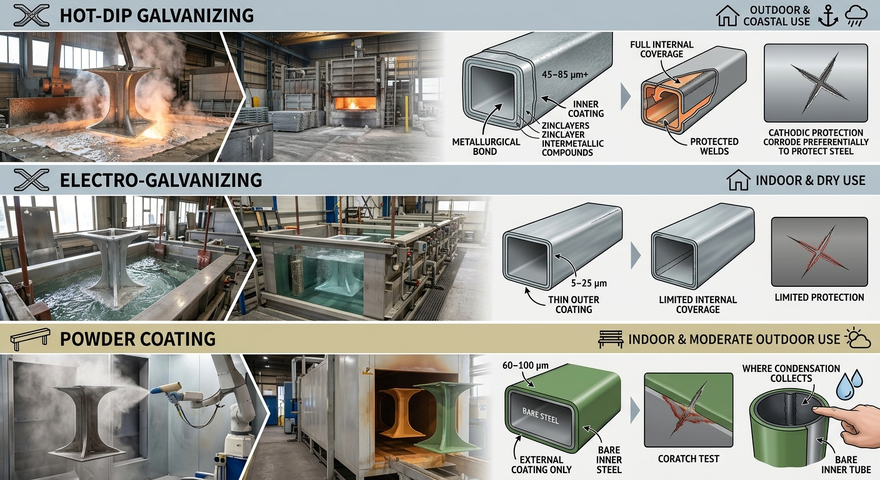
Hot-dip galvanizing, electroplating and powder coating
The terms are often mixed up in practice. “Galvanized” can mean very different things, so it is worth knowing the difference.
| Hot-dip galvanizing | Electroplated (electro-galvanized) zinc | Powder coating only | |
|---|---|---|---|
| Process | immersion in molten zinc at ~450 °C | zinc deposited by electrolysis at room temperature | powder applied and cured in an oven |
| Thickness | 45–85 µm and above | typically 5–25 µm | 60–100 µm |
| Bond to steel | metallurgical (alloy layers) | mechanical / electrochemical | mechanical (adhesion) |
| Response to a scratch | cathodically protects the exposed steel | limited – the layer is thin | corrosion spreads under the paint |
| Coverage of hollow sections | inside tubes and in welds too | accessible surfaces only | external surfaces only |
| Suitable for | outdoor and coastal use | indoor, dry use | indoor and moderate outdoor use |
For a table base, the most underrated row is coverage of hollow sections. The column of a base is a hollow tube. Paint is applied to the outside only – the inside stays bare steel. In hot-dip galvanizing the molten zinc also runs into the inside of the tube and into the welds, which is precisely where condensation collects and where no maintenance ever reaches.
The duplex system: zinc and powder coating together
Hot-dip galvanizing and powder coating are not competitors. Combining the two is called a duplex system, and for hospitality furniture it is the best solution because it brings together two advantages:
- Appearance. A bare galvanized base is grey, with a characteristic crystalline spangle. That is perfectly acceptable in an industrial setting, but rarely right on the terrace of a city café. Powder coating allows any RAL shade.
- Service life. The paint slows down the consumption of zinc, and the zinc takes over protection once the paint gives way.
The effect is multiplication rather than addition. According to the American Galvanizers Association, a duplex system lasts 1.5 to 2.3 times longer than the sum of the two protections applied separately. The industrial application of powder coatings to hot-dip galvanized steel is covered by EN 15773.
The galvanized bases in the AG VEBO range are built exactly this way: the steel is hot-dip galvanized, then powder coated in black (RAL 180A), with a cast-iron top cross. When the paint is damaged, what lies underneath is not bare steel but zinc.
How long does it last? Corrosivity categories under EN ISO 12944-2
“How many years does it last?” is the wrong question until we say where the table stands. The standard EN ISO 12944-2 sorts environments into corrosivity categories from C1 to CX and defines how much zinc is consumed per year in each.
| Category | Zinc loss | Typical environment | Life of a hot-dip galvanized coating |
|---|---|---|---|
| C1 | ≤ 0.1 µm/year | heated interiors: offices, hotels, shops | effectively unlimited |
| C2 | 0.1–0.7 µm/year | unheated spaces, rural areas with little pollution | over 100 years |
| C3 | 0.7–2.1 µm/year | urban and moderately industrial areas, coast with low salinity | over 100 years |
| C4 | 2.1–4.2 µm/year | industrial areas, swimming pools, coastal areas, marinas | 20–40 years |
| C5 | 4.2–8.4 µm/year | near-permanent condensation, heavy pollution, offshore | 10–20 years (duplex recommended) |
| CX | 8.4–25 µm/year | extreme humidity and aggressive atmosphere, tropical offshore | shorter; duplex essential |
Source: Nordic Galvanizers, Hot Dip Galvanizing and corrosion categories (PDF). The stated service lives apply to coatings to EN ISO 1461 on steel thicker than 6 mm. See also Institute of Corrosion, ISO 12944 – The Corrosive Environment.
What this means for real terraces
- A city-centre terrace is normally C3. A hot-dip galvanized base there has no realistic life limit – it will be replaced in a refurbishment long before corrosion becomes an issue.
- A seaside venue is C4 or even C5, depending on distance from the water. There, the difference between a galvanized and a merely painted base is not cosmetic: it decides whether the furniture lasts five years or twenty.
- Winter salting raises the category locally, well inland too. A terrace next to a pavement that is salted in winter is, for the bottom 10 cm of the base, a far more aggressive environment than the location would suggest.
When your terrace needs a galvanized base
A galvanized base costs more. It is only fair to also say when you do not need one.
Definitely yes
- The terrace is within a few hundred metres of the sea.
- The bases stay outdoors all year round.
- The terrace adjoins a pavement that is salted in winter.
- There is a pool or spa nearby (chlorine in the air).
- The terrace is hosed down every evening.
- The bases stand where water pools – a flat terrace with no fall, gravel, grass.
Probably not needed
- The bases are used indoors (category C1).
- You only need the furniture seasonally, for a handful of events – in which case chair and table rental makes more sense.
The decision is simply arithmetic. If a galvanized base costs a few tens of euros more but saves one replacement in ten years – including labour, delivery and the table being out of service mid-season – it pays for itself the first time a replacement is avoided. We described the same logic in 5 Ideas for a Modern Café or Bar Terrace.
How to check a base before you buy
The word “galvanized” in a quotation is not yet information. Before buying, check:
- Which process? Hot-dip or electroplated. The difference in thickness can be tenfold.
- To which standard? For hot-dip galvanizing the reference is EN ISO 1461. Ask for it to be stated in the quotation or the sales document.
- Is the inside of the column galvanized too? With immersion it is; with painting it is not.
- What is under the paint? If the base is only powder coated, what lies under the paint is bare steel. In a duplex system it is zinc.
- What about the glides and levelling? A base standing directly on wet ground with no glides will wear faster whatever the protection.
- Is the product intended for professional use? That is a separate question from corrosion protection – covered in more detail in Certificates for HoReCa furniture.
Living with a galvanized base
- Clean with neutral products. Strongly alkaline and acidic agents dissolve zinc.
- Scratches in the paint on a galvanized base are not cause for alarm – underneath is zinc, not steel. It is still sensible to touch them up occasionally.
- Where you can avoid it, do not leave the bases over winter where salted snow piles up.
- White “wet storage stain” (white powdery oxide) on bare zinc is normal in the first months and is not a defect.
Galvanized bases in the AG VEBO range
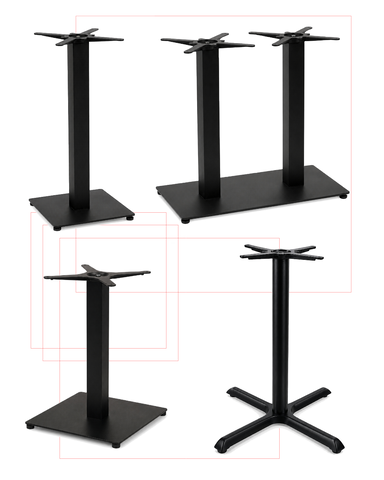
In the garden table bases and tables category, the following models are available hot-dip galvanized and powder coated. All are 73 cm high, black powder coated (RAL 180A), with a Ø 45 cm cast-iron top cross and four levelling glides.
| Model | Foot | Column | For table tops up to | Weight |
|---|---|---|---|---|
| NERO MEDIUM ZINC | 43 × 43 cm | 8 × 8 cm | 80 × 80 cm / Ø 90 cm | 18 kg |
| NERO XL ZINC | 50 × 50 cm | 8 × 8 cm | 90 × 90 cm / Ø 100 cm | 18 kg |
| NIKO ZINC | 65 × 43 cm | 8 × 8 cm | 110 × 80 cm | 23.5 kg |
| DUPLO NERO ZINC | 70 × 40 cm | two columns 8 × 8 cm | 160 × 90 cm | 25 kg |
All models are also available in a non-galvanized version (NERO MEDIUM, NERO XL, NIKO, DUPLO NERO), suitable for interiors and covered terraces.
The base is only half the table – the other half is the table top. For outdoor use the same rule applies as for the base: the material must be chosen for the actual environment, not for the photograph. For bar height there are bar table bases, and for interiors indoor bases.
Frequently asked questions about hot-dip galvanizing
What is the difference between hot-dip galvanizing and electroplating?
In hot-dip galvanizing the article is immersed in molten zinc at roughly 450 °C, producing a metallurgical bond and a coating 45–85 µm thick or more, in line with EN ISO 1461. In electroplating (electro-galvanizing), zinc is deposited by electrolysis at room temperature and the coating is typically only 5–25 µm thick. Hot-dip galvanizing is the appropriate process for outdoor hospitality use; electroplating is intended mainly for indoor, dry applications.
Does zinc protect the steel even where the paint is scratched?
Yes. Zinc is electrochemically less noble than iron and acts as a sacrificial anode – at the exposed spot it corrodes instead of the steel and protects it cathodically. That is why a scratch on a galvanized base does not spread, whereas on a merely painted base corrosion travels under the paint and lifts it.
How many years does a hot-dip galvanized table base last?
It depends on the environment under EN ISO 12944-2. In an urban environment (category C3) the coating life is over 100 years; in coastal and industrial environments (C4) it is 20–40 years; in the most aggressive environments (C5) it is 10–20 years. In practice this means corrosion is not the limiting factor in the life of a base, except directly by the sea.
What is a duplex system?
A duplex system is the combination of hot-dip galvanizing and powder coating. The paint slows the consumption of zinc, and the zinc takes over protection once the paint gives way. Total service life is 1.5 to 2.3 times longer than the sum of the two protections separately. The industrial application of powder coatings to hot-dip galvanized steel is covered by EN 15773.
Galvanized steel is grey – why are your bases black?
Bare hot-dip galvanized steel is grey, often with a visible crystalline spangle. AG VEBO galvanized bases are powder coated black (RAL 180A) after galvanizing, so the protection is invisible – the base looks identical to the standard version, but under the paint there is zinc instead of bare steel.
How should a galvanized table base be cleaned?
With neutral cleaning products and water. Strongly alkaline and strongly acidic agents dissolve zinc, so avoid them. White powder on bare zinc (wet storage stain) is a normal oxide phenomenon in the first months and does not indicate a fault.
Is galvanizing worth it for a covered terrace?
Often not. A covered terrace whose furniture is stored dry over winter is close to category C2, where an ordinary powder coated base will also last a long time. Galvanizing pays off where salt is present (sea or winter road salt), where there is constant damp or chlorine, or where the terrace is hosed down daily.
Need help choosing?
AG VEBO specialises in chairs, tables and other professional furniture for the HoReCa & Events sector. If you are not sure whether your location calls for the galvanized version, tell us where the terrace is and how it is used – we will advise based on the actual environment, not on the catalogue.
Contact us · All garden table bases · Browse the catalogue · See our references
AG VEBO d.o.o.
Author: Jan Češnjevar, AG VEBO d.o.o.
References
- BSI / CEN: BS EN ISO 1461:2022 – Hot dip galvanized coatings on fabricated iron and steel articles. Specifications and test methods.
- Galvanizers Association: EN ISO 1461 – British Galvanizing Standard (minimum coating thickness and mass table).
- Nordic Galvanizers: Hot Dip Galvanizing and corrosion categories (C1–CX categories to EN ISO 12944-2, zinc loss and expected service life). PDF.
- ISO / iTeh: ISO 12944-2 – Corrosion protection of steel structures by protective paint systems: Classification of environments. PDF.
- American Galvanizers Association: Duplex Systems for Corrosion Protection (synergistic effect 1.5–2.3×).
- BSI / CEN: BS EN 15773:2018 – overview of galvanizing standards including EN 15773 (powder coatings on hot-dip galvanized steel – duplex systems).
- AG VEBO: Certificates for HoReCa furniture, 2026.
- AG VEBO: 5 Ideas for a Modern Café or Bar Terrace, 2026.