
When the terrace season starts and when it ends is more often a matter of habit than of weather.
In April we carry the tables out; in October we put them away. Yet the average daily high in those two months is practically the same. In Slovenia, where AG VEBO is based, it is about 16 °C in both. (Source: ARSO, climatological normals 1981–2010. The same pattern holds across temperate Europe.)
The difference between April and October is not warmth, it is light. Across the EU the clocks go back on the last Sunday in October, after which the sun sets before 5 p.m. The evening part of the terrace is therefore not too cold, it is dark. That is actually good news, because darkness is solved with light and heat, not with new furniture.
What follows: what genuinely changes on a terrace through the year, what stays, and a calendar you can work from.
We usually think of a terrace as either open or closed. In reality it passes through four periods during the year, and each brings its own problem: one in spring, another in summer, another in autumn and another in winter.
| Period | Main constraint | What removes it |
|---|---|---|
| Early spring (March–April) | cold mornings and evenings, wind, low sun | heaters, cushions, considered layout |
| Summer (June–August) | sun and midday heat | shade: parasols, planting |
| Autumn (September–November) | darkness, rain, cold evenings | lighting, heaters, textiles |
| Winter (December–February) | frost, salt, damp, storage space | correct storage or weather-resistant furniture |
Each of these periods has a different constraint and therefore a different solution. A terrace furnished only for July will work less well in April and October than it could.
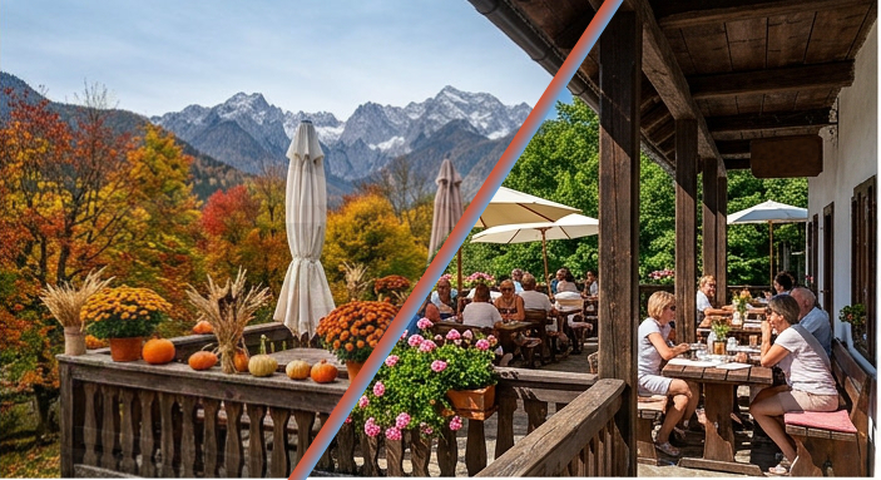
The most useful distinction in seasonal planning is not between good-looking and practical, but between what stays all year and what changes.
| Permanent layer | Seasonal layer | |
|---|---|---|
| What belongs to it | chairs, tables, table bases, table tops | seat cushions, parasols, heaters, planting, textiles, lighting |
| How often it changes | every 8–10 years | 2–4 times a year |
| What it determines | the venue's character, comfort, capacity | atmosphere and usability in a given period |
| Buying criterion | durability and suitability for professional use | quick replaceability and price |
The point is simple: let the light layer carry the seasonal change, not the furniture. A terrace has to stay recognisable through the year. A guest who sat with you in July should recognise you in October.
Both routes are legitimate; only the seasonal layer behaves differently.
So the mistake is not the colour of the furniture. The mistake is having nothing on the terrace that could be changed at all through the year, because then the terrace looks identical in April, July and October, even though a guest comes for three different things in those months.
We wrote more about coordinating colours and materials on a terrace in 5 Ideas for a Modern Café or Bar Terrace.
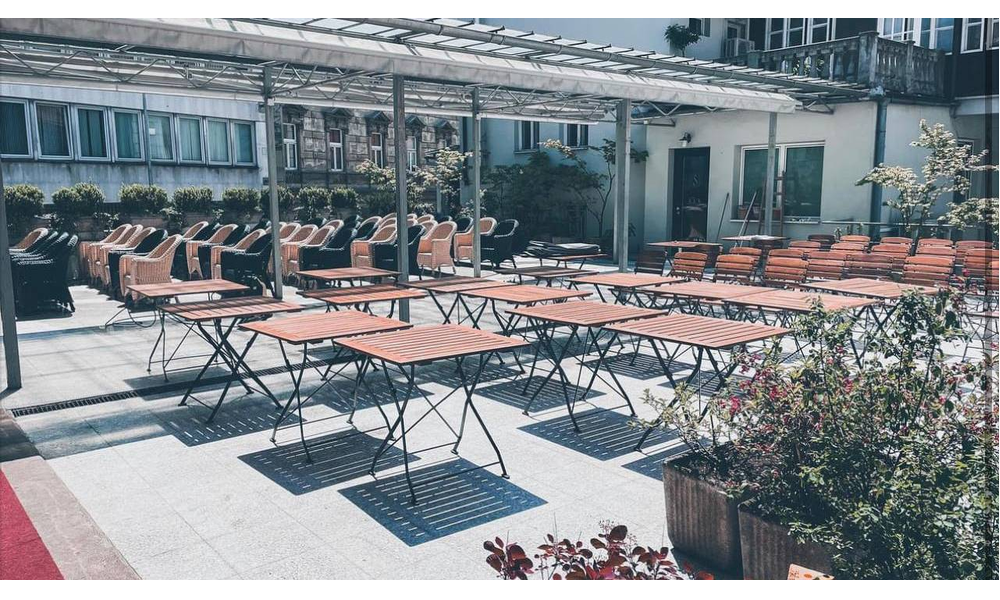
The first warm weekend in March or April arrives unannounced every year, and every year too soon. Venues that are ready then pick up the trade that the others lose.
Before the furniture goes out, it is worth inspecting. Half an hour of checking saves a complaint in the middle of the season.
In March and April the sun is low. A parasol that completely covers a table at midday in July does nothing at five in the afternoon in April, because the sun comes in from the side. In spring it is therefore often better not to open the parasols at all and to use the sun as an asset, since guests have only just come out of winter.
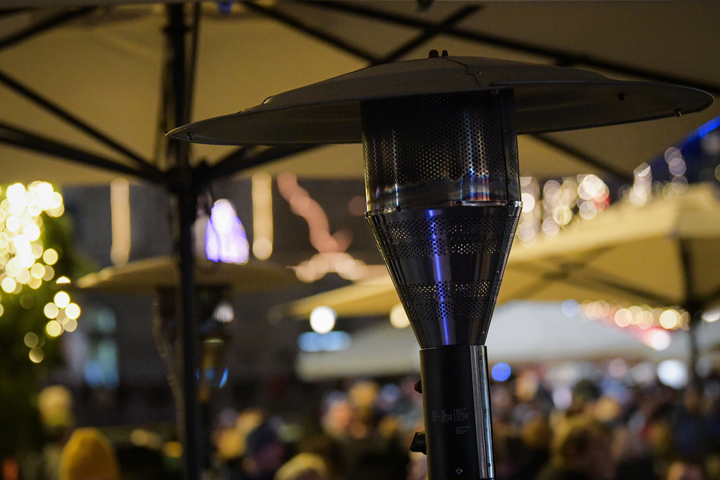
What does work in spring are terrace heaters and cushions. April evenings cool quickly, and a heater is the difference between a guest who orders one more drink and a guest who pays and leaves.
In July and August the constraint on a terrace is the sun. A table in full sun at 2 p.m. does not sell. It physically exists, but commercially it does not. This is the most underrated fact in terrace planning.
So it makes no sense to see parasols as decoration. See them as purchased seats. A parasol that covers four tables turns them from dead into active space for the whole summer.
If you have a pool or a lawn beside the venue, summer is also the only period when it pays to put out sun loungers.
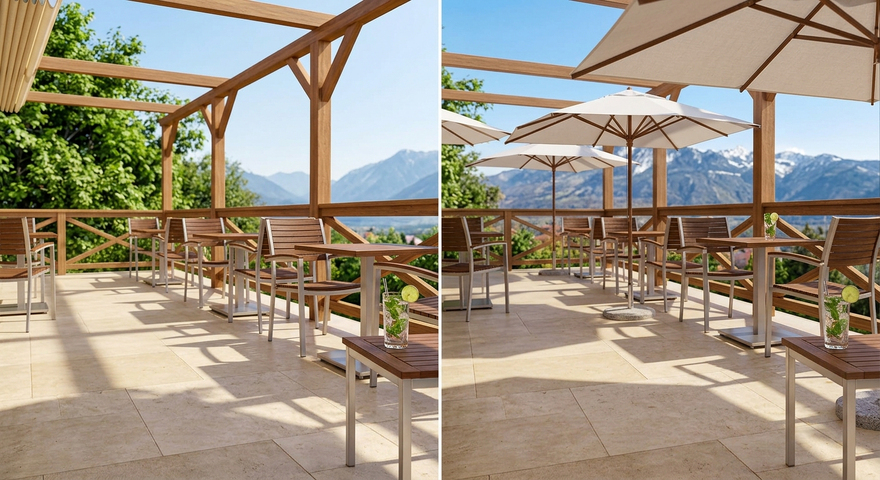
Back to the figure we started with: October daily highs are roughly the same as April's. October is nonetheless the month when terraces usually close.
There are three reasons, and none of them is temperature:
The first two reasons are solved with equipment you largely already have.
Rather than general promises about returns, it is better to work with your own numbers. Take:
Additional contribution = D × T × R × M, from which you subtract the energy the heaters use and the extra staff time.
An illustrative example (the figures are invented, insert your own): 35 days × 6 tables × 2 turns × €12 margin is roughly €5,000 of contribution per season. Whether that adds up depends entirely on your numbers. The purpose of the calculation is to make the decision on the basis of your actual trade rather than a feeling.
One more thing matters: you do not get those days by paying more rent, taking more floor area or hiring more staff. It is the same square metres you are already paying for.
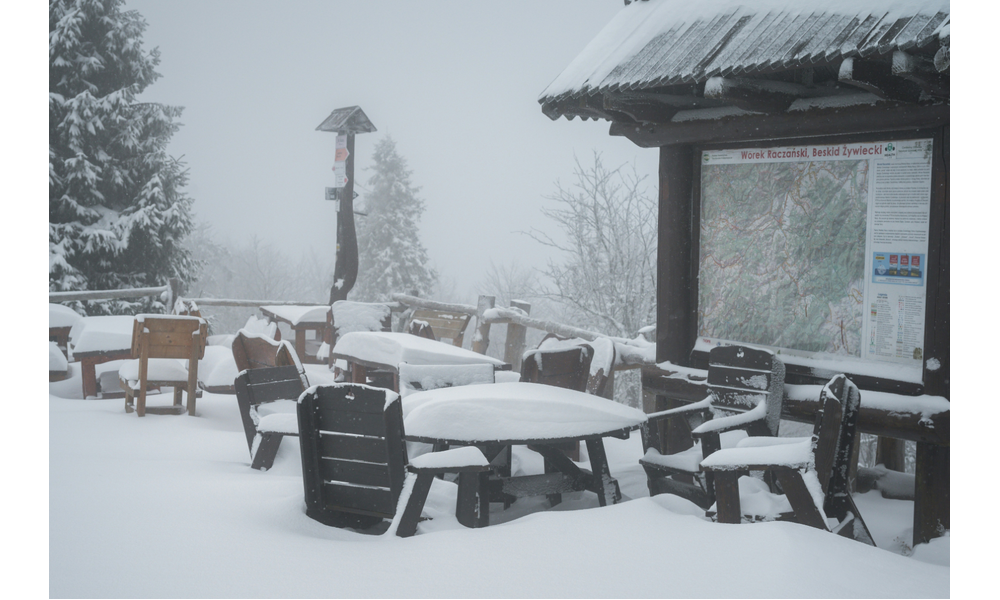
Winter is when furniture is most often damaged, and not by the cold but by being stored wrongly.
If you only furnish a terrace occasionally, for a handful of events, weddings or seasonal functions, then instead of year-round storage it is often better value to use chair and table rental. For frequent moving and for events there is also the ZOWN catering programme with transport trolleys.
A practical summary you can print and pin up in the office.
| Month | What to do |
|---|---|
| February | Inspect the furniture in storage. Order the missing floor glides, cushions and spare parts, because lead times are shorter in February than in May. |
| March | Clean the terrace, check the ground and the levelling. Set out a smaller part of the terrace, since the first warm weekend arrives unannounced. Heaters out. |
| April | Full layout. Spring cushions. Parasols ready, though not necessarily open. |
| May | Check the shade at different hours of the day. Adjust the table layout to the flow of trade. |
| June–August | Summer mode: shade, lighter textiles, planting, more frequent cleaning. The heaters can be put away. |
| September | Still full season. Prepare the lighting and check the heaters before you need them. |
| October | Autumn mode: light, heaters, heavier textiles, blankets. Shrink and concentrate the terrace deliberately. |
| November | The decision: close, or operate a smaller, heated terrace. Gradual packing away. |
| December–January | Furniture stored and dry. If part of the terrace operates for a festive programme, make it the most sheltered part. |
How well a terrace works seasonally is decided at the point of purchase, not at the first changeover. If you move the furniture up and down four times a year, properties other than the catalogue photograph start to matter.
You can see some concrete examples of terraces furnished for year-round use among our projects.
AG VEBO specialises in chairs, tables and other professional furniture for the HoReCa & Events sector. If you are furnishing a terrace from scratch or thinking about extending the season, tell us how the terrace operates and how much storage space you have. We take that into account in the selection too, not only the appearance.
Contact us · Parasols · Terrace heaters · Browse the catalogue
AG VEBO d.o.o.
Author: Boštjan Vesel, AG VEBO d.o.o.
